
- tscprinters
- 09 Jan 2026
5 Ways to Reduce Label & Ribbon Waste in Your Barcode Operations
TSCPRINTERSINDIA : 5 Ways to Reduce Label & Ribbon Waste in Your Barcode Operations
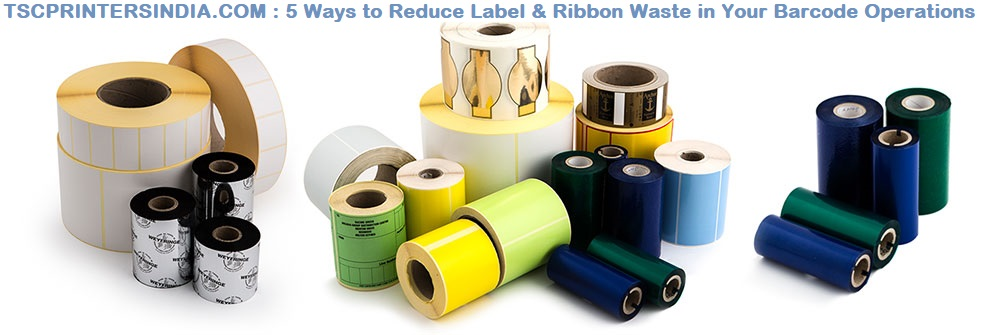
In the fast-paced world of logistics, every fraction of a rupee counts. For clients of Indian Barcode Corporation (a unit of Mindware), barcode printing is the heartbeat of the warehouse. However, if not managed correctly, the costs of labels, ribbons, and printhead replacements can quietly erode your profit margins.
Here is a detailed guide on the top 5 ways to reduce barcode printing costs in your warehouse while maintaining peak operational efficiency.
1. Optimize Your Label Size and Layout
Many warehouses use standard 4″ x 6″ labels because they are “industry standard,” but often, a large portion of that label is wasted white space.
Shrink the Footprint: Reducing your label size from 4″ x 6″ to 4″ x 4″ (or smaller) can save up to 25-30% in material costs over time.
Backfeed & Gap Reduction: Use printers that support “backfeed” functionality. This allows the printer to pull the label back to the lead edge, minimizing the gap between labels and reducing liner waste.
Minimalist Design: Ensure your barcode has a sufficient “Quiet Zone” (the white space around the code), but eliminate unnecessary logos or redundant text that require larger labels.
2. Choose the Right Printing Technology (DT vs. TT)
Choosing between Direct Thermal (DT) and Thermal Transfer (TT) is the biggest cost-driver in barcode printing.
| Feature | Direct Thermal (DT) | Thermal Transfer (TT) |
| Consumables | Label only (Heat sensitive) | Label + Ribbon |
| Initial Cost | Lower (no ribbon) | Higher (ribbon required) |
| Durability | Low (fades in heat/light) | High (resistant to chemicals/sun) |
| Printhead Life | Shorter (direct friction) | Longer (ribbon acts as a buffer) |
Cost Strategy: Use Direct Thermal for short-term shipping labels that only need to last a few days. Use Thermal Transfer for rack locations and long-term asset tags; while TT ribbons cost more, they prevent the massive hidden cost of re-printing faded labels that can no longer be scanned.
3. Implement “Ribbon Save” Technology
If your warehouse uses Thermal Transfer printing, you are often wasting ribbon. In a standard printer, the ribbon moves at the same speed as the label, even if you are only printing a single line of text.
How it Works: Advanced printers (like those from TSC or Zebra provided by Mindware) feature a “Ribbon Save” function. The printer lifts the printhead and stops the ribbon movement when it encounters a non-printed area.
The Impact: This can reduce ribbon consumption by up to 50% in applications where labels have significant blank sections.
4. Prioritize Preventative Printhead Maintenance
The most expensive replaceable part of your printer is the thermal printhead. A single scratch or “blown pixel” can make a barcode unreadable, forcing you to replace the entire unit.
The “Cleaning Card” Rule: Clean your printhead every time you change a roll of labels or ribbon. Dust and adhesive buildup act like sandpaper, wearing down the head.
Pressure Settings: Avoid using maximum darkness/pressure settings. High heat significantly shortens printhead life. Calibrate your printer to find the “sweet spot” where the code is crisp but the heat is minimal.
Use Genuine Consumables: Off-brand labels often have inconsistent coatings that can cause “pitting” on the printhead. Using Mindware-approved consumables ensures the surface is smooth and protective.
5. Standardize and Consolidate Purchases
Fragmented purchasing—buying different label sizes for different departments—leads to “small-batch” pricing and high inventory overhead.
Bulk Buying: Consolidate your warehouse requirements to buy labels and ribbons in bulk. Indian Barcode (Mindware) offers significant “blanket order” discounts for high-volume users.
Universal Templates: Standardize on 1 or 2 label sizes across your entire facility. This reduces the time staff spends switching rolls and allows you to buy larger, more cost-effective rolls (e.g., 8-inch OD rolls instead of 5-inch).
Conclusion
Reducing barcode costs isn’t just about finding the cheapest labels; it’s about reducing waste and downtime. By optimizing your label size, choosing the right tech for the job, and maintaining your hardware, you can turn your printing station from a cost center into a lean, efficient part of your supply chain.
